Health and Safety Policy for Man and Van Primrose Hill
 At Man And Van Primrose Hill, health and safety is built into every stage of our work. We are committed to carrying out removals, transport, loading, and unloading in a way that protects our staff, customers, visitors, and members of the public. This policy sets out the standards we follow to reduce risk, maintain safe working conditions, and ensure that every man and van service is delivered responsibly. Our approach is based on prevention, clear communication, and careful planning. We aim to create a safe environment where hazards are identified early and controlled effectively.
We recognise that moving goods, furniture, and equipment can involve physical strain, awkward spaces, heavy items, and time pressure. For that reason, our health and safety policy focuses on preparation, supervision, and sensible working methods. All operations are expected to be conducted with due care and attention, and no task should be carried out in a way that places anyone at unnecessary risk. Safety is not treated as an added extra; it is an essential part of our everyday work.
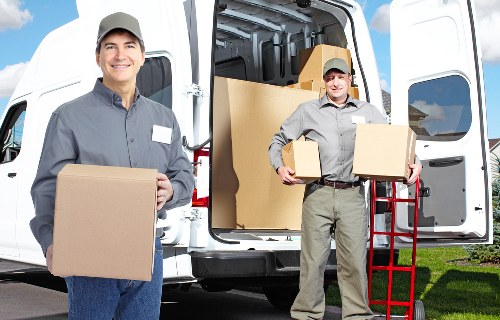 The company expects all personnel involved in the man and van removals process to behave responsibly and follow safe working practices at all times. This includes using appropriate lifting methods, wearing suitable clothing and footwear, and remaining alert to changing conditions. Where a task appears unsafe, work must be paused until the issue has been assessed and controlled. We believe that good safety performance depends on communication, awareness, and shared responsibility.
Risk assessments are carried out for routine work and for any job that presents additional hazards. These assessments consider access routes, vehicle positioning, weather conditions, load weight, fragile items, and possible obstructions. If a property, site, or collection point presents a risk, the team will adapt its approach accordingly. In some cases, the safest option may be to change the lifting method, use additional equipment, or rearrange the sequence of tasks. Safety planning is always preferred to reacting after an incident has occurred.
Manual handling is one of the main areas of focus for our van and man operations. Staff are trained to judge the weight, shape, and stability of items before lifting. They are encouraged to ask for assistance when loads are awkward or too heavy to handle safely. Team members should bend at the knees, keep loads close to the body, and avoid twisting while carrying. Where possible, trolleys, straps, blankets, and other handling aids are used to reduce strain and prevent damage.
 Vehicle safety is equally important. Our vans are kept in roadworthy condition and are checked regularly to ensure that tyres, brakes, lights, mirrors, and load spaces are safe to use. Loads must be secured properly before travel, with care taken to prevent shifting during transit. Drivers are expected to comply with speed limits, road rules, and rest requirements. A safe journey is part of a safe service, and every trip must be planned with the same attention as the loading process.
We also take care to protect customers’ property and the spaces where we work. Hallways, staircases, doorframes, lifts, pavements, and loading areas may present trip or collision hazards if they are not managed carefully. Our team is expected to keep access routes clear, move steadily, and avoid blocking exits. If the weather makes surfaces slippery or visibility poor, extra caution is required. This commitment helps us deliver a safe man and van service without compromising efficiency.
Our responsibilities extend to fire safety, emergency response, and accident reporting. Staff must know the basic actions to take in the event of a fire, injury, vehicle issue, or property damage. Any incident, no matter how minor it appears, should be reported promptly so it can be recorded and reviewed. This allows us to identify patterns, improve procedures, and prevent repeat occurrences. Learning from near misses is an important part of maintaining strong standards.
Training plays a central role in keeping our man with a van work safe and professional. New team members receive guidance on lifting techniques, hazard awareness, safe driving, equipment use, and customer site etiquette. Refresher training is provided when needed, especially if work practices change or new risks are identified. Supervisors are responsible for reinforcing safe behaviour and ensuring that standards remain consistent across all jobs.
 The company also expects everyone to look after their own wellbeing and that of others. Fatigue, stress, rushing, and poor communication can all increase the risk of accidents. Staff should speak up if they feel unable to complete a task safely, and managers should support decisions that protect health and safety. No job should be prioritised above personal safety or the safety of others involved in the move.
Protective equipment and practical tools are used where required. Depending on the task, this may include gloves, safety footwear, hi-vis clothing, straps, blankets, and load aids. Equipment must be checked before use and stored correctly after the job is complete. Damaged or unsuitable equipment should be removed from service immediately. Using the right tools in the right way helps reduce injury, protect goods, and support consistent service quality.
At Man And Van Primrose Hill, we view health and safety as a shared duty that shapes how we plan, work, and improve. By maintaining clear procedures, encouraging careful handling, and keeping a strong focus on risk control, we can deliver reliable moving services while protecting everyone involved. This policy is reviewed regularly to ensure it remains effective, practical, and aligned with the needs of our work.
 We are committed to continuous improvement and to maintaining a culture where safety is respected in every task, from the first lift to the final delivery. Our man and van removals service depends on this discipline, and every team member is expected to contribute to it through awareness, professionalism, and care.